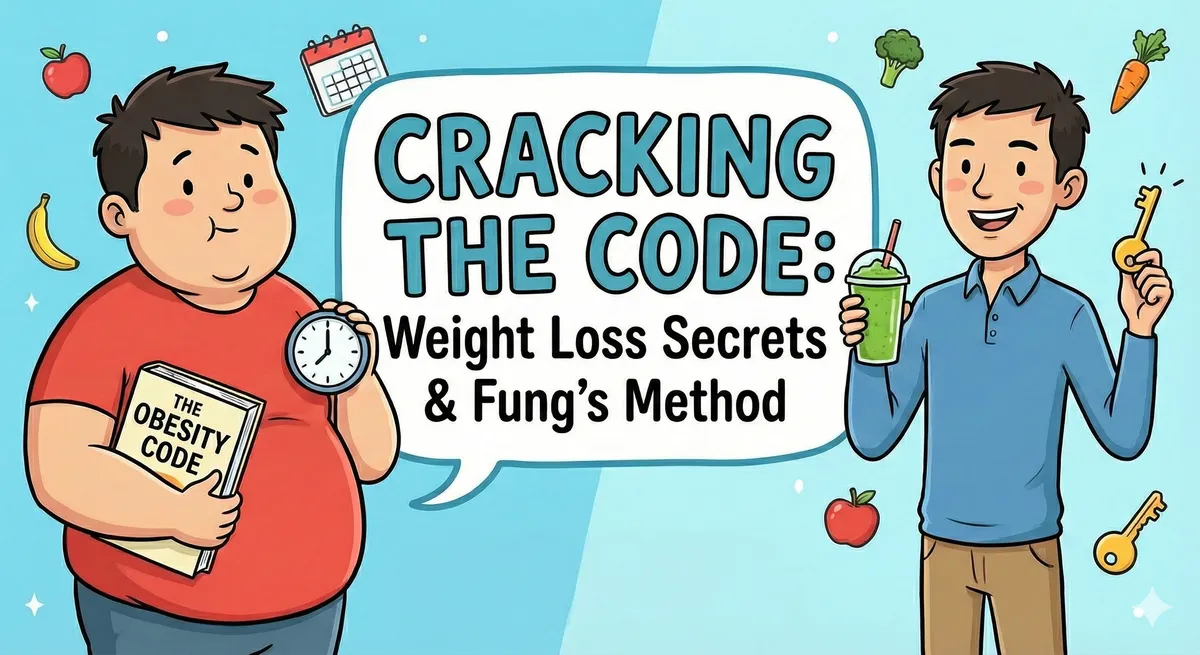
Obesity is a Hormonal Problem
According to Dr. Jason Fung, obesity is not caused by eating too much or moving too little, but by chronically elevated insulin. Insulin is the hormone that stimulates fat storage. As long as insulin remains high, the body simply cannot burn fat—regardless of how many calories you count.
This explains why classic calorie-restrictive diets structurally fail. During prolonged energy restriction, the body adapts by lowering the basal metabolic rate (adaptive thermogenesis), an evolutionary protective mechanism against starvation. At the same time, hunger hormones (such as ghrelin) rise and satiety signals drop, making food increasingly difficult to resist. When calorie restriction inevitably stops, the metabolism remains lowered while food intake normalizes. The result? Rapid regain of fat mass: the notorious yo-yo effect.
Not All Calories Are Equal
Different foods have a fundamentally different hormonal effect, independent of their caloric value.
- Sugar and refined carbohydrates cause rapid and high insulin spikes.
- Vegetables, fiber, and fats, on the other hand, have a minimal impact on insulin.
- Proteins occupy a middle ground: they cause a limited insulin response but simultaneously stimulate satiety hormones and are crucial for muscle maintenance.
Therefore, what and when you eat is more important than how much you eat.
Fasting as Metabolic Restoration
In Dr. Fung’s view, intermittent fasting is not a crash diet, but a metabolic intervention. By allowing longer periods without food intake, insulin levels can drop for extended periods, which is a necessary condition to make fat burning possible again. At the same time, fasting normalizes the regulation of hunger and satiety hormones that often become disrupted by chronic eating. Fasting gives the body metabolic rest—something that has become rare in a modern environment of continuous food availability.
My Strategy: How I Apply This in Practice
1. Fasting – When I Eat
I practice Intermittent Fasting with fixed fasting days: Monday, Wednesday, and Friday. On those days, I eat only one meal in the evening. The goal is not to eat less, but to create long periods without insulin production. During the fast, only water, black coffee, and tea are allowed.
I view hunger not as an emergency signal, but as a temporary hormonal signal (ghrelin). Drinking water and waiting a bit usually suffices; hunger comes in waves and eventually subsides. The first week requires some perseverance, but after that, it becomes easier.
Snacking is not allowed on any day, because every time you eat, it triggers an insulin response.
2. Nutrition – What I Eat and Why
My diet is tuned for low insulin and high satiety. I choose my food based on its hormonal impact:
Fats (The Safe Fuel)
- What: Olive oil, nuts, avocado, fatty fish, butter and full-fat dairy.
- Impact: Fats barely stimulate insulin. This is crucial: you can eat fats to stay satiated for a long time without kicking your body out of “fat-burning mode.” They provide stable energy without sugar crashes.
- Note on Dairy: Always buy full-fat yogurt, milk, and cheese. Avoid “Light” or “0% fat” versions; when manufacturers remove fat, they almost always add sugar or thickeners to fix the taste, which spikes insulin.
Proteins (The Building Block)
- What: Meat, fish, eggs, beans.
- Impact: Proteins are powerful satiators (via hormones like peptide YY) and essential for muscles. However, take note: proteins do stimulate insulin (moderately). An excess of protein is converted by the body into glucose. Therefore, I eat proteins in moderation: enough to feel full, but not unlimited.
Vegetables & Fiber (The Buffer)
- What: Leafy greens, broccoli, cauliflower, asparagus.
- Impact: Fibers slow down the absorption of carbohydrates and thus dampen the insulin spike. They fill the stomach mechanically (which quiets hunger) without a calorie load.
Carbohydrates
-
Refined Carbs (The Enemy): White bread, white pasta, white rice, candy, soda. These cause an explosive insulin spike, stopping fat burning immediately. They provide poor satiety, leading to hunger and cravings shortly after eating.
-
Whole Grains (The Exception): If you eat carbohydrates, strictly choose whole wheat or whole grain options (e.g., steel-cut oats, quinoa, whole wheat pasta). The fiber content in these foods acts as a barrier, causing a slower and lower insulin rise compared to refined grains. However, they are still energy-dense, so keep portions small.
Fruit (Nature’s Candy)
-
Impact: We are conditioned to think all fruit is unlimitedly healthy, but modern fruit is bred to be extremely sweet. Fruit contains fructose, which can contribute to insulin resistance in the liver if eaten in excess.
-
Strategy: Treat fruit as a dessert, not a main course. Stick to low-sugar options like berries (raspberries, blackberries, strawberries) and avoid high-sugar “sugar bombs” like bananas, grapes, mangoes, and dried fruit.
3. Exercise – Strength Over Cardio
I do not exercise primarily to burn calories (that effect is negligible), but to improve my insulin sensitivity. Strength training is preferred because it:
- Protects muscle mass during fat loss;
- Utilizes the high growth hormone levels present during fasting;
- Creates muscles that act as a “sponge” for glucose.
4. Stress & Sleep – The Invisible Factors
Chronic stress raises cortisol. Cortisol drives up blood sugar, which in turn causes insulin production. Poor sleep has the same effect. Therefore, my approach also includes:
- Prioritizing 7-8 hours of sleep;
- Daily walking;
- Incorporating moments of mental rest.
Weight loss cannot be viewed separately from the rest of your life.
Conclusion
Biologically speaking, there are essential fats and proteins, but no essential carbohydrates. By keeping my insulin low through fasting, nutrition, and strength training, I give my body the chance to restore its metabolism and lose weight without constant hunger or struggle.
This doesn’t feel like a diet, but like a system that finally makes sense.